“Convoys mean war,” Adolf Hitler told me quietly on the afternoon of May 23 as we sat in the famous living room of his Berghof at Berchtesgaden. International legal precedents were well established, he said, that escorting munitions, war materials, and deadly weapons to an enemy with armed naval forces was a warlike act. These precedents had been determined by Anglo-Saxon maritime powers for a long time, were thoroughly well known and understood by all legal authorities.
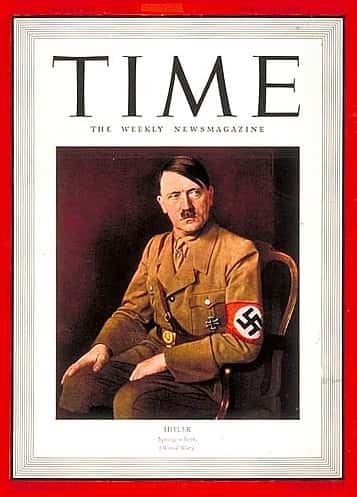
Greatest single news event of 1938 took place on September 29, when four statesmen met at the Fuhrerhaus, in Munich, to redraw the map of Europe. The three visiting statesmen at that historic conference were Prime Minister Neville Chamberlain of Great Britain, Premier Edouard Daladier of France, and Dictator Benito Mussolini of Italy. But by all odds the dominating figure at Munich was the German host, Adolf Hitler.
Fuhrer of the German people, Commander-in-Chief of the German Army, Navy & Air Force, Chancellor of the Third Reich, Herr Hitler reaped on that day at Munich the harvest of an audacious, defiant, ruthless foreign policy he had pursued for five and a half years. He had torn the Treaty of Versailles to shreds. He had rearmed Germany to the teeth–or as close to the tooth as he was able. He had stolen Austria before the eyes of a horrified and apparently impotent world.
All these events were shocking to nations which had defeated Germany on the battlefield only 20 years before, but nothing so terrified the world as the ruthless, methodical, Nazi-directed events which during late summer and early autumn threatened a world war over Czechoslovakia. When without loss of blood he reduced Czechoslovakia to a German puppet state, forced a drastic revision of Europe’s defensive alliances, and won a free hand for himself in Eastern Europe by getting a “hands-off” promise from powerful Britain (and later France), Adolf Hitler without doubt became 1938’s Man of the Year.
Mr. [David] LLOYD GEORGE (Caernarvon Boroughs, Ind. L.) said he wished to make a few observations, because he had a certain share of responsibility for the Balfour Declaration, which was the basis for our Mandate in Palestine. He would certainly respond to the appeal made by the Secretary of State [for the Colonies] in his statesmanlike speech to say nothing that would cause any exacerbation of the racial and religious antagonisms that existed in Palestine. Everybody knew how difficult it was to deal with a situation where either religion or race was involved. When both these factors existed the difficulties were almost insurmountable. But we had our duties and our obligations. Unfortunately, the demand put forward by the Arabs was a demand for the revocation of the Mandate. It was no use pretending that it was not.[…]
Hitherto the Jews have financed their own philanthropies, and with a liberality and skill which has been universally recognized. In behalf of those of their religion who are still suffering in the war-ridden districts of Europe they are now for the first time seeking outside aid.
The non-sectarian character of the drive on behalf of the Jewish war sufferers was emphasized in the appeal which marked its formal beginning yesterday. An accompanying letter was signed by Evangeline Booth of the Salvation Army, Bishop Burch, Archbishop Hayes and many other representatives of Christian churches. A statement of the nature of the crisis was prepared by the Rev, Dr. S. Parkes Cadman and sent to every Protestant minister in the city to serve as a basis for an announcement from the pulpit. A similar statement for the Catholic churches was sent out by Mgr. Joseph P. Mooney.